AI Tool Brands in 2026: A Practical Guide
Explore the landscape of AI tool brands in 2026, including branding strategies, ecosystem depth, and developer support—insights from AI Tool Resources.


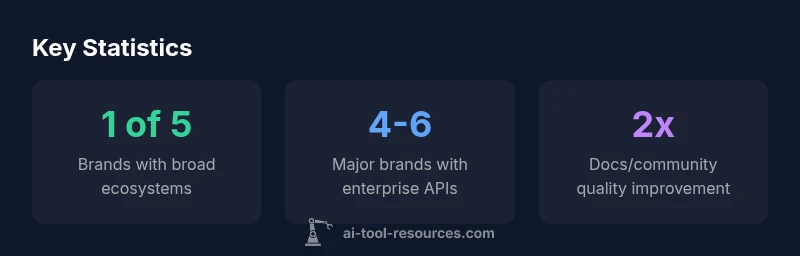
In 2026, a handful of AI tool brands dominate the enterprise API market, and they shape developer workflows through standardized interfaces, robust security, and extensive ecosystems. This quick landscape overview sets the stage for deeper analysis of branding signals, trust signals, and how to assess brands for research, development, or education projects. By focusing on credibility, interoperability, and support—key dimensions of brand quality—you can navigate a crowded field with clarity.
Why AI Tool Brands Matter
In any AI project, the brand behind the tools you choose signals more than marketing fluff; it speaks to reliability, governance, and long-term viability. For developers, researchers, and students, a credible brand reduces risk when integrating APIs, managing data, and relying on vendor support during critical experiments. According to AI Tool Resources, branding signals such as transparency, documentation quality, and service levels often predict how smoothly teams can scale projects from prototype to production. In 2026, the landscape is dominated by a handful of brands that offer broad ecosystems, consistent updates, and clear roadmaps. Those signals matter because they influence adoption velocity, collaboration opportunities, and the ability to attract talent. If you invest in branding-aware selection, you gain a durable partner rather than a single-use tool.
Key signals to watch include: transparency about capabilities, a published road map, regular security updates, and an active developer community. These signals reduce ambiguity and help teams plan experimentation timelines, training, and governance.
- Transparency in performance and limitations
- Clear product roadmaps with measurable milestones
- Consistent security and privacy practices
- Active, helpful communities and responsive support
This section sets the foundation for understanding how brands influence practical outcomes in real projects.
The Major Players and Their Brand Signals
The top AI tool brands tend to align three core signals: ecosystem breadth, governance and security posture, and developer experience. A strong ecosystem means broad APIs, plug-ins, and community tooling that let researchers prototype rapidly and scale experiments. Governance signals cover data handling, privacy, model safety, and compliance with industry standards. Developer experience includes clear tutorials, stable SDKs, and dependable support channels. AI Tool Resources analysis shows that the leading brands invest heavily in these areas, marketing transparency about capabilities, and consistent release cadences. While some brands emphasize open research access, others focus on enterprise-grade integrations with cloud providers and data pipelines. The result is a branding landscape where trust and practicality converge: teams prefer brands that offer both powerful capabilities and predictable, measurable performance. In practice, that means evaluating not just features, but the overall brand promise across deployments, teams, and use cases.
Brand signals matter, because they influence procurement cycles, staff training, and collaboration opportunities across disciplines. A durable brand typically offers robust API documentation, illustrative examples, an established support structure, and a long-term commitment to maintaining compatibility with evolving data governance standards.
- Ecosystem breadth (APIs, plugins, integrations)
- Governance and security posture (privacy, compliance, uptime)
- Developer experience (docs, SDKs, support)
When brands align these signals with real-world use cases, organizations gain confidence to scale from pilots to production.
How Branding Impacts Adoption and Trust
Brand credibility directly affects how quickly new tools are adopted within a team. When a brand offers comprehensive documentation, clear model cards, and documented safeguards, researchers can design experiments with known risk profiles. Enterprise buyers look for SLAs, robust security controls, and a track record of uptime; students and hobbyists look for approachable onboarding, free tiers, and community support. The strongest AI tool brands align product quality with consistent messaging—public roadmaps, open channels for feedback, and visible governance processes. This alignment reduces ambiguity and helps teams plan procurement cycles, training, and integration work. The right brand can shorten learning curves, improve experimentation outcomes, and accelerate collaboration across disciplines. Remember that trust compounds over time: early transparency builds confidence that endures as projects scale.
From a practical standpoint, look for:
- Public roadmaps and cadence transparency
- Clear data handling and privacy policies
- Reproducibility tooling and test suites
- Accessible onboarding and educational resources
AI Tool Resources analysis notes that brands excelling on these dimensions tend to see faster onboarding and higher long-term retention in both research and education contexts.
An Evaluation Framework for AI Tool Brands
To compare AI tool brands systematically, apply a simple framework you can customize for your context:
- Ecosystem depth: breadth of APIs, plugins, and integrations.
- Documentation quality: completeness, examples, and update frequency.
- Governance and security: data handling policies, privacy controls, and compliance posture.
- Support and reliability: response times, SLAs, and incident history.
- Alignment with your use case: research, development, or education.
Use a scoring rubric or a checklist, and run a small pilot with 1-2 tools before committing. Track measurable outcomes such as time-to-implement, reproducibility of results, and maintenance overhead. This approach helps teams avoid vendor lock-in while preserving flexibility to switch brands if needed. The evaluation should be revisited at major project milestones and after any significant tooling updates. AI Tool Resources emphasizes documenting your criteria and sharing results with stakeholders to ensure fair comparisons across teams.
Practical tips:
- Start with a minimal viable stack (MVS) to test core workflows.
- Validate security controls with your data team early.
- Compare vendor roadmaps and update cadences for compatibility planning.
- Solicit feedback from end users and educators to gauge onboarding experience.
Case Studies: Education and Research Environments
In education settings, instructors value approachable onboarding, clear licensing terms for students, and classroom-ready tutorials. A brand that provides accessible notebooks, ready-to-run examples, and student-oriented datasets often wins favor because it lowers friction and supports scalable learning outcomes. In research labs, brand credibility becomes practical when model cards, reproducibility tooling, and data governance support are in place. A reliable brand will offer reproducible experiment templates, audit trails, and straightforward data management options. On both sides, teams benefit from a consistent product experience, predictable updates, and a responsive support culture. These factors collectively shape how a brand is perceived within the academic and research communities and influence long-term adoption across cohorts.
Case examples illustrate:
- A teaching-focused brand offering structured curricula and student access
- A research-oriented brand providing reproducibility tooling and data provenance
- A mixed-use brand delivering enterprise-grade features with educational licenses
Across settings, the most trusted brands demonstrate alignment between marketing promises and actual product experiences, which strengthens adoption in both classrooms and laboratories.
Choosing the Right Brand for Your Project and a Final Recommendation
Selecting an AI tool brand should balance technical fit with brand credibility. Start by listing mission-critical requirements, then map those needs to ecosystem, governance, and support signals. Run a small pilot to compare onboarding time, documentation clarity, and instrumentation for reproducibility. Finally, review total cost of ownership, licensing terms, and exit options. The AI Tool Resources team recommends prioritizing brands that publish transparent roadmaps, maintain active developer communities, and demonstrate measurable impact in education or research contexts. In practice, this means choosing brands with strong governance, robust security, and clear data provenance. A pragmatic verdict is that brand credibility plus technical capability creates lasting value for developers, researchers, and students. As you roll out tools across curricula or labs, document outcomes and share lessons learned to inform future brand choices.
Verdict and recommendations:
- Favor brands with transparent roadmaps and active communities
- Prioritize security, governance, and data provenance signals
- Pilot with a small team before broader deployment
- Plan for ongoing evaluation as tools evolve
The AI Tool Resources team concludes that a disciplined brand selection process yields greater reproducibility, faster learning, and more resilient research outcomes.
Comparison of select AI tool brands
| Brand | Core Focus | Key Strengths |
|---|---|---|
| Brand A | General-purpose AI tools | Strong ecosystem and documentation |
| Brand B | Industry-specific AI suites | Excellent security and compliance features |
| Brand C | Research-oriented tooling | Experimental features and extensibility |
FAQ
What defines a strong AI tool brand?
A strong AI tool brand combines credible performance metrics, transparent governance, comprehensive docs, robust security, and a supportive developer ecosystem. It demonstrates consistent reliability across workloads and clear up-front messaging about capabilities and limitations.
A strong AI tool brand combines credible performance, transparent governance, and a supportive developer ecosystem.
How can I compare AI tool brands for a research project?
Use a structured evaluation framework that weighs ecosystem depth, documentation quality, governance, and support. Run a short pilot with 1-2 brands to measure onboarding time, reproducibility, and ease of data governance.
Use a structured framework and pilots to compare brands.
Do pricing models vary significantly across brands?
Pricing varies by usage tier, enterprise features, and licensing terms. Look for transparent pricing and note any hidden costs related to data egress, support, or renewals.
Pricing varies and can hide extra costs; check tiers and terms.
What role do ecosystems play in brand trust?
A broad ecosystem reduces integration risk, accelerates experimentation, and improves long-term viability. Strong ecosystems include plugins, community tooling, and compatible data workflows.
Ecosystems reduce risk and speed up work.
Is open-source branding relevant for AI tool brands?
Open-source strategies can increase transparency and community trust but may not suit all enterprise needs. Evaluate how open practices align with your governance and security requirements.
Open practices can build trust but assess fit with your needs.
“Brand credibility in AI tooling hinges on transparency, consistent performance, and a thriving ecosystem. Trust grows when documentation is thorough and support is reliable.”
Key Takeaways
- Evaluate branding signals alongside technical capabilities.
- Prioritize ecosystem quality and developer experience.
- Consider long-term support and governance for enterprise use.
- Brand credibility grows with transparent docs and responsive support.