AI Tool Subscription Price in 2026: A Practical Guide
Discover how ai tool subscription price varies by tier, usage, and add-ons. This data-driven guide helps developers, researchers, and students compare plans, estimate costs, and negotiate optimal AI tool value in 2026.


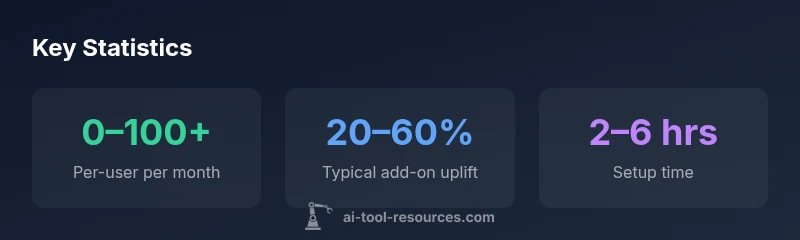
The typical ai tool subscription price ranges from free or low-cost entry plans to premium enterprise packages, usually spanning roughly $0 to $100+ per user per month, depending on features, usage, and support. For teams scaling across departments, per-seat pricing often decreases with volume, while add-ons like advanced analytics or priority support can push monthly costs higher.
Understanding the pricing landscape
Pricing for ai tool subscriptions is rarely one-size-fits-all. Vendors segment pricing into tiers, usage models, and value-add options. Most vendors offer a free or low-cost entry tier, a mid-tier for growing teams, and an enterprise tier with advanced controls. The difference between per-seat and usage-based pricing can be significant as teams scale; some tools charge per API call, per GB of data processed, or per project. For developers and researchers, it is essential to map your use case to a model that aligns with your expected workloads. A careful read of the terms reveals potential hidden costs: overages when you exceed API quotas, storage fees for data retention, and premium support charges. AI Tool Resources notes that total cost of ownership often hinges on the combination of seat count, API consumption, and required security features, rather than any single line item.
Pricing tiers and what they include
Most vendors structure pricing around four common tiers, with gradual feature expansion. Free or Starter tiers typically offer basic access and limited API calls, suitable for exploration or personal projects. Pro or Team plans unlock higher quotas, collaboration features, and basic analytics. Business or Enterprise tiers add robust security, dedicated support, and deeper integrations. Finally, Custom or Enterprise+ plans provide personalized SLAs, custom tooling, and governance controls. When evaluating tiers, list your must-have features (e.g., API rate limits, data retention, access to enterprise-grade security) and compare them side-by-side to avoid surprises at renewal.
Hidden costs to watch for
Beyond the base price, many AI tools impose additional charges that can surprise teams. Overage fees occur when usage exceeds quotas; data storage and egress can add monthly costs; premium support, onboarding, and training charges may be billed separately. Some vendors charge for advanced analytics, extra model types, or specialized security/compliance modules. If you work across multiple environments, look for integration or deployment fees. A thorough forecast should include potential costs for onboarding, training, data transfer, and security tools to avoid sticker shock at renewal time.
How to estimate cost for your team
Begin by cataloging current and anticipated users, projects, and workloads. Estimate monthly API calls, data processed, and required storage. Create scenarios for low, medium, and high usage, then map these to pricing tiers or usage-based models. Use a pricing calculator if the vendor provides one, or construct a simple model in a spreadsheet. Consider the value of features like priority support, governance controls, and advanced analytics, and assign a monetary value to each. Don’t forget to factor in annual vs monthly terms; annual commitments frequently unlock meaningful discounts, improving total cost of ownership over the long run.
Pricing patterns by AI tool category
Pricing can vary by category, such as natural language processing, computer vision, or code-generation tools. Coding assistants and developer-focused platforms often emphasize per-seat pricing with generous API quotas for teams. Vision and multimodal tools may emphasize data processing limits and storage costs. Data analytics or model-monitoring suites frequently bundle monitoring, auditing, and security features at higher tiers. When choosing, align your category with your use case and compare price-to-value rather than just the sticker price. This approach helps avoid overpaying for features you don’t need while ensuring you can scale as requirements grow.
Negotiating and optimizing pricing
Negotiation works best when you have a clear use case, projected volume, and a fallback plan. Start with annual terms to access discounts, then request a tailored quote based on your predicted usage. Ask about pilot programs, volume-based discounts, and multi-year commitments. If your needs shift, you can renegotiate; vendors often adjust terms for larger teams or longer horizons. Building a business case around time-to-value, reliability, and security can strengthen leverage during negotiations. Remember to test a trial period to validate value before locking in a long-term contract.
Case examples
- Startup team (5 engineers): A Pro/Team plan with 20,000 monthly API calls, 5 users, and standard support. Estimated cost: in the lower mid-range, with room for scale as the product matures.
- University research lab (20 researchers): A hybrid approach combining Starter access for researchers and a shared enterprise tier for data governance, providing moderate per-user costs while ensuring compliance controls.
- Mid-size business (100 users): An Enterprise tier with SLAs, security features, and integrations. Expect higher monthly costs but stronger reliability, governance, and vendor support.
Best practices for selecting a pricing plan
Always begin with a needs assessment: list must-have features, identify potential add-ons, and estimate potential growth. Run a multi-year forecast to compare monthly vs annual costs, including any discounts for upfront commitments. Prioritize plans that offer clear data governance, security controls, and easy integration with your existing stack. Finally, ensure you can scale with minimal friction as your team or usage grows, and preserve the ability to renegotiate if your needs evolve.
Pricing bands for common AI tool subscriptions
| Plan Type | Typical Range per user per month | Common Features | Best For |
|---|---|---|---|
| Free / Starter | "$0–$5" | Basic access, limited API calls | Individuals, students |
| Pro / Team | "$10–$40" | API access, dashboards, collaboration | Small teams, researchers |
| Business / Enterprise | "$100–$400" | SLA, security, integrations | Mid-size to large orgs |
| Enterprise+ | "$400–$1000+" | Dedicated manager, custom features | Large enterprises |
FAQ
What is the typical price range for ai tool subscriptions?
Prices vary widely by tier and usage. Most vendors offer free or low-cost options, with paid tiers ranging from basic per-user plans to enterprise licenses. Use this guide to map your needs to a realistic budget for 2026.
Prices vary by tier and usage. Start with a low-cost plan and scale as you validate value.
Do annual subscriptions usually save money?
Yes, many providers offer discounts for annual commitments, reducing monthly costs and improving total cost of ownership. Always compare annual vs monthly terms and consider a trial before locking in.
Annual plans often cut monthly costs; evaluate the long-term value.
What hidden costs should I watch for?
Overage fees, data storage, API call limits, onboarding, premium support, and compliance tooling can add significant costs beyond the base price. If you work across multiple environments, factor these into your budget.
Look for hidden fees like overage and add-ons when budgeting.
How should I choose between per-user vs usage-based pricing?
If usage grows with team size, per-user can be predictable. If usage scales rapidly, a usage-based or hybrid plan may reduce wasted capacity but requires monitoring.
Per-user plans are predictable; usage-based plans can scale with demand.
What features justify higher-tier pricing?
Key features include higher API quotas, advanced analytics, priority support, security/compliance tools, and seamless integrations with existing systems.
High-tier features matter when you need reliability and scale.
What negotiating tactics work for AI tool pricing?
Ask for volume discounts, annual terms, and pilot programs. Share your projected usage and be prepared to renegotiate as needs evolve.
Negotiate volume, term length, and pilots to land better terms.
“"Pricing should align with the value delivered and usage patterns, not just features."”
Key Takeaways
- Start with a low-risk plan to validate value.
- Compare total cost of ownership, not just monthly fees.
- Ask for annual pricing to unlock discounts.
- Anticipate add-ons that lift price by 20–60%.
- Negotiate based on usage and support needs.