How to Prevent Artificial Intelligence: A Practical Guide
Learn actionable steps to minimize AI risk with governance, safety, and monitoring. This educational guide covers policy, technical safeguards, and incident response for developers, researchers, and students.


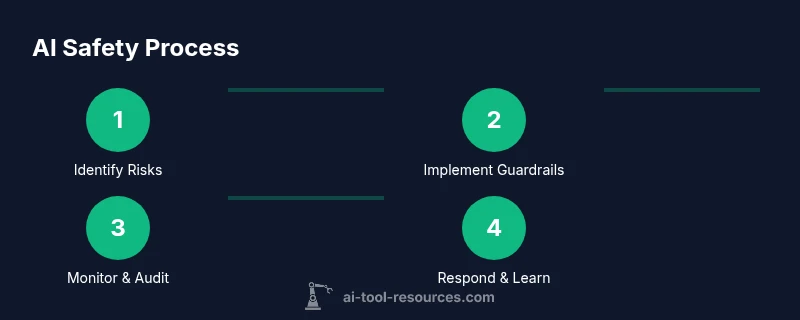
Goal: prevent artificial intelligence from harming people and property by applying governance, safety, and accountability measures. This quick guide outlines risk assessment, guardrails, data hygiene, and continuous monitoring. You’ll learn who should be involved, what to implement, and how to measure success—before and after deployment. This quick outline also highlights essential governance structures, risk controls, and ethical checks that teams can adapt to different domains.
What does it mean to prevent artificial intelligence?
Preventing artificial intelligence from causing harm requires a holistic approach: governance, technical safeguards, and responsible deployment. According to AI Tool Resources, organizations succeed when they codify risk management into daily workflows and ensure accountability across teams. The phrase 'how to prevent artificial intelligence' drives a practical agenda: define clear objectives, identify failure modes, and build defensive layers. In practice, this means aligning leaders, engineers, data scientists, and ethicists around a common risk philosophy and a transparent decision-making process.
Governance and policy foundations
Effective prevention starts with governance. Define risk appetite, establish roles such as a governance board or AI safety officer, and create formal policies that cover data use, model development, testing, and incident response. Adopt a lifecycle approach: from ideation to retirement, document decisions, criteria, and escalation paths. Transparency is critical: publish high-level safety objectives and maintain auditable records. AI Tool Resources notes that a lightweight governance scaffold can scale from small teams to large organizations, enabling consistent risk management without bureaucratic drag. Use policy checklists, risk registers, and decision logs to keep guardrails visible and actionable.
Technical safeguards you can implement
Robust safeguards reduce the likelihood and impact of failures. Start with data hygiene: clean, diverse data, bias checks, and privacy-preserving techniques. Build guardrails into model design: input validation, output constraints, and rejection of unsafe prompts. Enforce least privilege access and secure logging so incidents are traceable. Implement a model lifecycle with versioning, automated testing, red-teaming, and explicit stop criteria for unsafe behavior. Plan for explainability where feasible and maintain human-in-the-loop for high-stakes decisions. These controls create multiple overlapping layers so a single failure is less likely to propagate.
Data handling and privacy considerations
Data is the lifeblood of AI, and proper handling is essential to prevent harm. Minimize data collection to what is strictly necessary; implement data minimization and retention policies. Use synthetic data for testing to reduce real-data exposure while preserving realism. Apply privacy-preserving techniques such as differential privacy or federated learning where appropriate. Maintain data provenance, lineage, and quality metrics so you can trace errors back to sources. Regularly review data for bias and representativeness, and document any remediation steps.
Deployment and operational controls
Before moving to production, apply risk gates that require sign-off from stakeholders. Use canary releases and phased rollouts to limit blast radius during early deployment. Enforce adaptive safeguards that adjust to new inputs and evolving threats, with automated rollback if safety thresholds are breached. Maintain clear SLAs and expect incidents. Operational runbooks should specify who to contact, how to triage, and how to communicate with users. These practices help maintain safety while enabling rapid iteration.
Monitoring, auditing, and incident response
Continuous monitoring detects anomalies and safety breaches quickly. Instrument models with meaningful metrics such as out-of-distribution alerts, uncertainty estimates, and performance drift. Schedule independent audits and third-party reviews to check for bias and noncompliance. Establish an incident response plan with defined roles, runbooks, and communication templates. Practice tabletop exercises to refine escalation, containment, and recovery. AI Tool Resources analysis shows teams that combine monitoring with regular audits achieve faster remediation and greater accountability.
People, culture, and ethics
People drive safety. Invest in training on responsible AI, ethics, data privacy, and risk-aware decision-making. Create safe spaces for reporting safety concerns without blame, and recognize contributions to risk reduction. Encourage diverse teams to surface blind spots. Align incentives with safe outcomes rather than only speed or accuracy. This cultural foundation ensures governance and technical safeguards translate into real-world practice.
AUTHORITY SOURCES
For further reading and verification, consult leading standards and research. The National Institute of Standards and Technology (NIST) provides an AI risk-management framework that guides governance and controls. The Stanford Encyclopedia of Philosophy offers rigorous ethical discussions of AI, fairness, and responsibility. The OECD's AI Principles outline high-level governance for AI developers and policymakers. Use these sources to supplement your organization's policy and technical work and to stay updated on evolving best practices.
- https://www.nist.gov/itl/ai-risk-management-framework
- https://plato.stanford.edu/entries/ethics-ai/
- https://www.oecd.org/ai/principles/
30-day action plan to get started
Day 1–7: appoint governance roles, set objectives, and assemble a cross-functional risk team. Day 8–14: map data flows, inventory data assets, and identify critical safeguards. Day 15–21: implement basic guardrails, set up logging, and draft incident response templates. Day 22–30: run a small pilot, collect feedback, and adjust governance templates. This plan provides a concrete starting point and demonstrates quick wins to stakeholders. The AI Tool Resources team suggests documenting decisions and communicating progress to stakeholders to sustain momentum.
Tools & Materials
- Policy framework template(An ISO/NIST-aligned governance template to document risk management policies)
- Risk assessment checklist(Checklist covering data, model behavior, and deployment risks)
- Data inventory and lineage guide(Track data sources, quality, and biases across pipelines)
- Incident response plan template(Playbooks for containment, communication, and remediation)
- Logging and monitoring plan(Define metrics, alert thresholds, and retention)
- Ethics and safety training materials(Optional team-wide sessions on responsible AI)
- Synthetic data tooling(Privately test safeguards without exposing real data)
Steps
Estimated time: 6-8 weeks
- 1
Establish governance and risk appetite
Form a cross-functional risk team and define clear objectives for AI safety. Assign ownership, document decision rights, and set measurable risk thresholds to guide every stage of development.
Tip: Start with a lightweight charter to gain early executive buy-in. - 2
Map systems and data flows
Diagram data sources, processing steps, and model touchpoints. Identify where data quality and privacy issues could appear, and map escalation paths for detected risks.
Tip: Use data lineage visuals to quickly reveal weak spots. - 3
Define guardrails and success criteria
Specify design-time constraints and production-time thresholds. Align guardrails with business objectives and craft success metrics tied to safety outcomes.
Tip: Keep guardrails modular to adapt to evolving use cases. - 4
Implement data hygiene and bias checks
Enforce data minimization, diversity audits, and privacy controls. Run bias analyses before training and after deployment to catch disparate impact.
Tip: Automate bias checks where feasible to reduce manual effort. - 5
Pilot with risk gates and canary releases
Launch in a controlled subset, monitor for incidents, and gradually expand. Have rollback procedures ready if thresholds are breached.
Tip: Limit the pilot to non-critical workloads to learn safely. - 6
Set up monitoring and incident response
Deploy dashboards and alerts for drift, uncertainty, and anomalies. Practice runbooks and tabletop exercises to refine containment.
Tip: Schedule quarterly audits to validate monitoring effectiveness. - 7
Review, learn, and institutionalize
Capture learnings from incidents and post-mortems, update policies, and adjust governance with stakeholder input.
Tip: Publicly share lessons learned to reinforce accountability.
FAQ
Why is it important to prevent artificial intelligence?
Preventing harm from AI reduces risk to people, property, and reputation and supports responsible, sustainable deployment. It helps ensure models behave as intended in real-world settings.
Preventing AI harm reduces risk and supports responsible deployment by ensuring models behave safely and predictably.
Who should own AI risk management?
Ownership is typically shared among executives, engineers, data scientists, privacy officers, and legal teams. A cross-functional AI safety board often oversees policies and incident responses.
A cross-functional team, including leadership, engineers, data scientists, and legal, should own AI risk management.
What is the difference between governance and guardrails?
Governance sets policies and responsibilities; guardrails are technical controls implemented within models and data pipelines to prevent unsafe outcomes.
Governance is policy and process; guardrails are the technical controls inside systems.
How can I measure the effectiveness of safeguards?
Use a mix of metrics: incident counts, containment time, drift detection, bias scores, and audit completion rates. Regularly review dashboards with stakeholders.
Measure with multiple metrics like incidents, containment time, drift, and bias scores, then review with leadership.
Can small teams implement these practices?
Yes. Start with a lightweight governance model and essential guardrails, then scale as you gain experience and buy-in.
Absolutely—start small and scale gradually as you learn.
What are common pitfalls to avoid?
Over-reliance on a single metric, poor data quality, lack of diverse input, and neglecting documentation can undermine safeguards.
Be wary of single-metric blindness, bad data, and missing documentation.
Watch Video
Key Takeaways
- Define governance early and keep it lightweight.
- Apply layered safeguards to create defense in depth.
- Prioritize data hygiene and privacy in every phase.
- Monitor continuously and rehearse incident response.
- Foster an ethics-minded culture across teams.