Do AI Tools Cost Money? A Practical Pricing Guide for 2026
Discover whether AI tools cost money, explore common pricing models, and learn budgeting tips for developers, researchers, and students in 2026.


Do ai tools cost money? Yes—most AI tools involve ongoing costs beyond a one-time purchase, including subscriptions, usage-based fees, and enterprise licenses. This quick answer previews pricing concepts and helps you estimate total ownership. The full article dives into typical models, what drives cost, and practical budgeting tips for developers, researchers, and students navigating the AI tool landscape. Whether you’re evaluating open source options or paid platforms, understanding pricing early can prevent budget surprises.
Do AI tools cost money: pricing reality in 2026
Pricing for AI tools has shifted from a single upfront purchase to a spectrum of ongoing costs. Do ai tools cost money? Yes, for most teams, costs accumulate via subscriptions, usage-based fees, data storage, and premium support. This section explains why pricing differs, how tiers map to features, and what you should track when budgeting. We’ll also compare common models against common project profiles to help you forecast total cost of ownership. AI Tool Resources emphasizes that the most economical path often starts with a clear usage plan and a requirement checklist before selecting a vendor.
How pricing models differ across AI tools
Most AI tools fall into a few broad pricing categories, each with distinct budgeting implications:
- Subscription (per user or per seat): predictable monthly or annual costs that scale with your team size. Ideal for ongoing projects with steady usage.
- Usage-based (pay-as-you-go): costs tied to actual usage, such as API calls or compute time. Great for bursty workloads but can spike during peak periods.
- One-time/perpetual licenses: a single upfront payment, with optional renewals for updates or support. Best for on-prem or heavily customized setups.
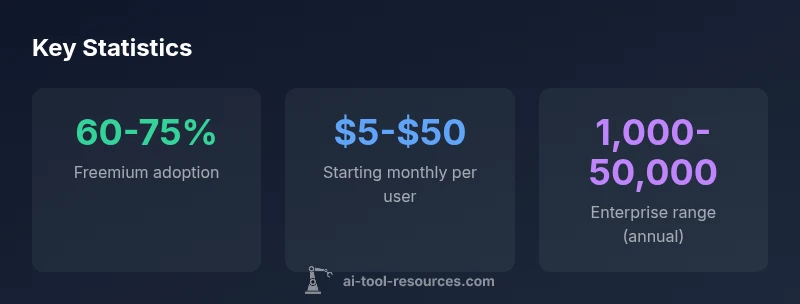
- Freemium and trials: free access to limited features or quotas, useful for validation before spending. Watch for upgrade triggers that boost prices.
AI Tool Resources findings show that most teams blend models—start with a free or low-cost tier for validation, then scale using subscriptions or usage-based plans as needed.
Pricing models at a glance
| Pricing model | Typical cost range | Best use case | Key trade-offs |
|---|---|---|---|
| Subscription (per user/month) | "$5-$50" | Teams needing predictable budgeting | Recurring payments; scales with seats |
| Usage-based (per unit/API call) | "$0.001-$0.10 per unit" | Bursty workloads and experiments | Costs vary with demand; can be unpredictable |
| One-time license / perpetual | "$100-$5,000" | On-prem or long-tail projects | Upfront cost; updates and support may be extra |
FAQ
Do AI tools cost money?
Yes. Most AI tools charge ongoing fees such as subscriptions, usage-based pricing, and enterprise licenses. Costs vary by features, usage, and scale. Always review hidden costs like data storage, premium support, and onboarding.
Yes. AI tools usually cost money, and the price depends on usage and features. Look for hidden costs in storage and support.
What factors determine pricing for AI tools?
Key cost drivers include usage volume, model complexity, data storage, SLAs, support levels, onboarding, and integration needs. Discounts often apply for annual commitments or larger teams.
Usage, features, and scale drive pricing; bigger teams and data needs raise costs.
Are there free AI tools and trials?
Many providers offer free tiers or trials with limited quotas. They’re useful for validation, but plan for upgrades if you outgrow the limits or need support.
Yes, you can start with free tiers or trials to test fit.
How can I estimate the total cost over a year?
Estimate monthly recurring fees, add expected usage, storage, and onboarding costs, then include potential discounts. Build multiple scenarios (low/medium/high usage) to plan for growth.
Calculate recurring fees, usage, storage, and onboarding for a yearly view.
What pricing models should beginners look for?
Beginners should prioritize predictable subscriptions or freemium tiers for validation, then evaluate usage-based options as needs grow. Avoid long-term commitments before validating value.
Start with predictable pricing and validate value before expanding.
“Pricing for AI tools isn’t a single sticker price; it’s a function of usage, scale, and required support. Plan accordingly.”
Key Takeaways
- Start with a clear budget baseline
- Map pricing to usage and features
- Leverage free tiers for validation
- Negotiate enterprise discounts where possible
- Track total cost of ownership over time